
Pulsar vs FLIR Thermal Monocular
For hunting, Pulsar is usually the better buy: it is purpose-built for scanning game, with hunting-tuned image modes, a mature app and field-swappable batteries. FLIR's core detector technology is excellent and trusted in industrial and professional use, but its consumer monoculars lean general-purpose. Choose Pulsar for the field, FLIR for broad detection and pro work.
Pros
- Pulsar is purpose-built for hunting with tuned image modes and in-optic ranging
- Pulsar's one-app ecosystem and field-swappable batteries suit long outings
- FLIR offers trusted detector technology and simple general-purpose operation
Cons
- FLIR consumer monoculars lack hunting-specific controls and ecosystem
- Pricing overlaps, so neither brand is clearly cheaper across the board
Different design goals
FLIR is a foundational name in thermal imaging, and its detectors sit inside many industries, from building inspection to firefighting to defense. That heritage means strong, reliable sensor technology. But many FLIR handhelds are designed as general thermal cameras rather than dedicated hunting optics.
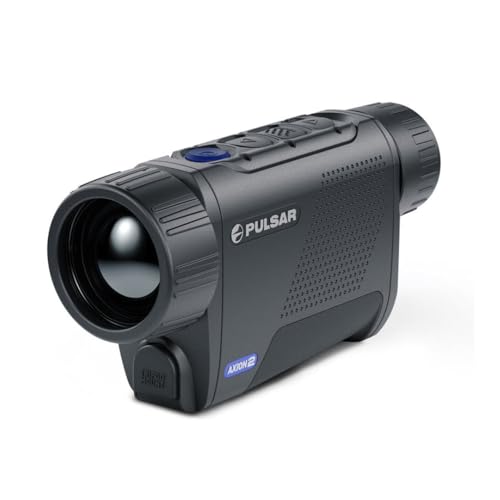
Pulsar builds specifically for the hunter and shooter. The Axion 2, for example, offers three sensitivity levels with signal amplification and contrast tuning aimed at pulling animals out of background clutter in varied weather. That hunting focus, rather than a resolution contest, is the real divide. On published specs and owner reviews, Pulsar's hunting ergonomics and image modes suit the field better than a general-purpose FLIR unit.
Hunting features and ergonomics
Pulsar's monoculars are shaped for one-handed scanning on the move: a rugged magnesium alloy housing that shrugs off drops and moisture, removable lithium packs for long sessions, and built-in Wi-Fi for streaming and recording a hunt. Higher tiers add integrated laser rangefinding so you can confirm distance before a shot through the same optic.
Consumer FLIR monoculars often emphasize portability and point-and-shoot simplicity over hunting-specific controls like dedicated color palettes tuned for game, in-optic ranging or a hunt-oriented app. For pure field use, Pulsar's ergonomics and feature set are more directly useful. For spot-checking heat signatures across many non-hunting tasks, FLIR's simplicity is an asset.
Popular options on Amazon
Prices change often - check the current price on Amazon.
App, recording and ecosystem
Pulsar's Stream Vision 2 app ties the whole lineup together over Wi-Fi for live streaming to a phone, recording footage and pushing firmware updates, as covered on the Stream Vision 2 app page. If you grow a kit of monoculars, binoculars and scopes, one app runs all of it.
FLIR's consumer apps are competent but the hunting ecosystem around them is thinner, and recording workflows are less geared to sharing field clips. For a buyer who records and reviews hunts or wants a single platform to standardize on, Pulsar's ecosystem is the stronger, more cohesive choice.
Price, support and verdict
Pricing overlaps and depends on tier, so check the current price on Amazon for the specific models you are weighing. Pulsar's US distribution through Sellmark makes hunter-focused support and service straightforward, and its optics hold resale value well in the hunting market.
Both brands are export-controlled under the EAR. The verdict: for hunting and shooting, Pulsar is the targeted tool and the easier long-term ownership. For versatile professional or industrial thermal detection, FLIR's detector pedigree and general-purpose simplicity may serve you better. Buy for the job you actually do.
Specifications
| Spec | Value |
|---|---|
| Sensor / resolution | XG35- 640x480 12µm |
| Housing / build | Without LRF |
| Weight | 0.8 Pounds |
| Length | 6.6 inches |
| Width | 1.9 inches |
| Height | 2.9 inches |
Frequently Asked Questions
Is Pulsar or FLIR better for hunting?
Pulsar is generally better for hunting. It is designed for scanning game with hunting-tuned image modes, in-optic ranging on higher tiers, rugged ergonomics and a hunt-focused app. FLIR's strength is broad, professional-grade thermal detection rather than dedicated hunting optics.
Does FLIR make better thermal sensors than Pulsar?
FLIR has deep detector heritage and excellent sensor technology used across many industries. In practice, for hunting, Pulsar's image tuning, ergonomics and ecosystem matter more than raw detector pedigree, so the better sensor company does not automatically mean the better hunting optic.
Which brand has the better app and recording?
Pulsar's Stream Vision 2 app is more hunt-focused, running streaming, recording and firmware updates across its whole lineup over Wi-Fi. FLIR's consumer apps work but the surrounding hunting ecosystem and recording workflow are thinner.
Is FLIR more expensive than Pulsar?
It depends on the tier, since both lineups span a wide price range and overlap. Rather than assume one is cheaper, compare the specific models you want and check current pricing on Amazon before deciding.
Ready to check the latest price?
Check Price on Amazon