
Pulsar vs AGM Thermal
Choose Pulsar if you want the deeper ecosystem, finer image at distance and stronger resale; choose AGM if you want more sensor for the money on close- to mid-range work. AGM typically undercuts Pulsar on price at a given resolution, while Pulsar leads on app, build polish and holding value. The right pick depends on budget and range.
Pros
- Pulsar wins on long-range image tuning, app maturity and resale value
- AGM wins on price per resolution and wide-FOV close-range scanning
- Both offer 384 and 640 cores, so you can match range to budget either way
Cons
- Pulsar charges a clear premium for the same sensor resolution
- AGM's software, accessory ecosystem and resale lag behind Pulsar
Sensor and image quality
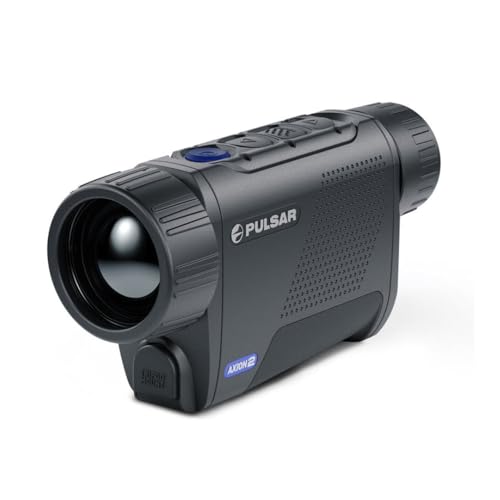
Both brands sell 384x288 and 640x480 cores, so the headline resolution often matches on paper. Where Pulsar tends to pull ahead is image processing and display. The Axion 2, for example, uses three sensitivity levels with signal amplification, filters and contrast adjustment to keep targets readable against varied backgrounds and weather, which helps at longer detection ranges.
AGM counters with aggressive specs for the price. A unit like the RattlerV2 19-256 leans on a wide field of view and fast 2.5x base magnification for close- to mid-range scanning and moving targets, which suits hogs in thick brush. Based on published specs and owner reviews, Pulsar is the cleaner long-range image while AGM is the value-dense close-range tool.
Price positioning
AGM's core appeal is cost. At nearly any given sensor resolution AGM usually lists below the comparable Pulsar, so a buyer fixed on getting 640x480 for the lowest outlay often lands on AGM. Pulsar asks a premium for the same core and recovers it through image tuning, software and build.
Rather than chase a number, decide what the money buys you. If you simply need thermal detection on a tight budget and hunt mostly inside a few hundred yards, AGM stretches further. If you want the extra reach, refinement and support that Pulsar's premium pays for, the gap is justified. Check the current price on Amazon for both before deciding, since street pricing shifts.
Popular options on Amazon
Prices change often - check the current price on Amazon.

App, ecosystem and build
Pulsar's advantage here is maturity. Stream Vision 2 over Wi-Fi handles streaming, recording and firmware updates across the whole lineup through the Stream Vision 2 app, and removable APS-series lithium packs let you swap a dead battery in the field. The rugged magnesium alloy housing resists shock, drops and moisture.
AGM's app and firmware story is serviceable but less polished, and battery and accessory ecosystems are thinner. For a buyer who records hunts, updates firmware often, or expects to grow a kit around one platform, Pulsar's ecosystem is the steadier bet. For a one-device buyer who just wants to see heat, the difference matters less.
Resale and support
Pulsar holds value better on the used market thanks to brand recognition and US distribution through Sellmark, which also means parts and service are easier to reach. That resale strength offsets part of the higher purchase price if you upgrade every few seasons.
AGM is a legitimate US-available brand with real support, but its optics generally depreciate faster and have a smaller secondhand audience. Note too that these thermal devices are export-controlled under the EAR, which applies to both brands. If long-term ownership cost and easy resale matter, lean Pulsar; if lowest upfront cost rules, AGM.
Specifications
| Spec | Value |
|---|---|
| Sensor / resolution | XG35- 640x480 12µm |
| Housing / build | Without LRF |
| Weight | 0.8 Pounds |
| Length | 6.6 inches |
| Width | 1.9 inches |
| Height | 2.9 inches |
What owners say
AGM is the other name that keeps popping up with Pulsar in comparison. So far it seems like the 640 resolution looks significantly better, from ...r/ThermalHunting
Frequently Asked Questions
Is Pulsar or AGM better for hog hunting?
For close-range hogs in brush, AGM's wide field of view and fast base magnification are a strong value play. For spotting and ranging at longer distances in open country, Pulsar's cleaner image pulls ahead. Match the pick to your typical shot distance.
Does AGM use the same sensors as Pulsar?
Both use common 384x288 and 640x480 thermal cores, so raw resolution often matches. The real difference is in image processing, display quality and software, where Pulsar's tuning and app tend to lead. AGM's edge is delivering that resolution at a lower price.
Which brand holds its value better?
Pulsar generally holds resale value better, helped by strong brand recognition and US distribution. AGM optics tend to depreciate faster with a smaller secondhand market, so Pulsar is the safer choice if you plan to resell and upgrade.
Can I compare Pulsar handhelds before choosing a brand?
Yes. Our best thermal monoculars guide ranks Pulsar handhelds by use case, so you can see exactly which Pulsar model lines up against the AGM you are considering before you spend.
Ready to check the latest price?
Check Price on Amazon