
Pulsar Thermal Batteries and Chargers
Most current Pulsar handhelds and riflescopes run on removable APS lithium-ion packs: the APS3 powers Axion monoculars and Thermion scopes, larger units use the higher-capacity APS5, and older gear may use APS2. If a pack will not charge, start with the cable and port, not the battery.
Which Pulsar battery fits your device
Pulsar standardized on the APS family so one pack type covers several devices. The key is matching the pack to the device body, not the sensor.
- APS3 - the workhorse pack. Per Pulsar's published specs it fits Axion thermal monoculars and Thermion thermal riflescopes, with a 3.6V charge voltage and quoted runtime of up to 4 hours in an Axion and up to 8 hours in a Thermion.
- APS5 - a higher-capacity pack used by larger-bodied units (such as Telos, Merger and newer Thermion builds) that need longer runtime.
- APS2 - an earlier, smaller pack seen on older or compact models.
Third-party APS3-compatible packs exist and advertise identical dimensions and connectors; treat runtime and longevity claims as editorial estimates based on published specs rather than guaranteed figures. See the full accessory lineup for mounts and adapters that pair with these devices.
How charging works and how long it takes
APS packs charge in an external cradle or dock over USB, so you can keep one pack in the device and top off a spare at the same time. Pulsar lists a full APS3 charge at about 3.5 hours from empty, which is the main reason hunters carry two or three packs instead of waiting on a single charge.
A few habits extend pack life and avoid downtime in the field:
- Charge spares the night before a hunt rather than relying on a partial charge.
- Use the supplied charging cable and a quality USB source; a weak or damaged cable is the single most common cause of slow or failed charging.
- Store lithium packs at room temperature and avoid leaving them fully drained for long periods.
Popular options on Amazon
Prices change often - check the current price on Amazon.


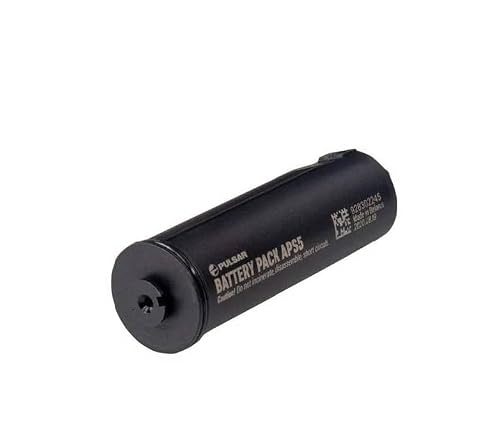


Pulsar thermal battery not charging - what to check
When an APS pack appears dead, work from the simplest cause outward before assuming the battery has failed:
- Cable and adapter: swap in a known-good charging cable and a different USB port or wall adapter. A frayed cable or an underpowered port often mimics a bad battery.
- Contacts: inspect the metal contacts on the pack and in the cradle for grime or corrosion, and wipe them clean and dry.
- Temperature: a very cold pack may refuse to charge; let it reach room temperature first.
- Seating: reseat the pack firmly in the cradle so the connectors line up.
- Cross-check: if a second pack charges normally in the same cradle with the same cable, the first pack is the likely culprit.
If a genuine pack still will not take a charge after these steps, it is a warranty and support question rather than a user fix.
How many packs to carry
Runtime depends on the device, screen brightness, recording, and Wi-Fi streaming, all of which draw power. A monocular used for casual scanning sips far less than a riflescope left on with the display bright and the app connected. As an editorial rule of thumb based on Pulsar's published runtimes, one spare covers a typical evening hunt and two spares cover an all-nighter or a cold night when lithium capacity drops. Buying genuine or verified-compatible packs matters more than buying the cheapest; a pack that cuts out mid-stalk is worse than carrying one more.
Specifications
| Spec | Value |
|---|---|
| Sensor / resolution | APS 3 |
| Housing / build | 0 |
| Weight | 0.2 pounds |
| Length | 2.0 inches |
| Width | 1.0 inches |
| Height | 1.5 inches |
Frequently Asked Questions
What battery does a Pulsar Axion use?
Current Axion thermal monoculars use the removable APS3 lithium-ion pack. Pulsar lists runtime of up to about 4 hours per APS3 charge in an Axion, so most users carry at least one spare.
Can I use the same battery in an Axion and a Thermion?
Yes - the APS3 pack is designed to fit both Axion monoculars and Thermion riflescopes, which is why a single pack type can power your handheld and your scope.
How long does a Pulsar battery take to charge?
Pulsar quotes a full APS3 charge in about 3.5 hours from empty using the supplied charger. Charging a spare in a separate cradle while you use the device keeps downtime close to zero.
My Pulsar battery is not charging - is it dead?
Not necessarily. Try a known-good cable and a different USB source, clean the contacts, and let a cold pack warm to room temperature. If a second pack charges fine in the same cradle but the first still will not, then the pack itself is likely the problem.
Are third-party Pulsar APS batteries safe to use?
Compatible aftermarket APS3 packs advertise identical dimensions and connectors. They can work, but quality varies; verified-compatible packs from reputable sellers are the safer choice, and genuine packs avoid warranty questions. Check the current price on Amazon before buying spares.
Ready to check the latest price?
Check Price on Amazon