
Pulsar Thermal Monoculars, Binoculars & Clip-Ons
Which Pulsar model actually fits how you hunt or scan, how the Axion, Telos, Merger and Thermion families differ by sensor and detection range, and which variant is worth the jump in price. An independent reference - not affiliated with Pulsar, Sellmark or Yukon Advanced Optics.
Pulsar thermal range at a glance
Pulsar names a model by its sensor, not its job, which is why the line-up is confusing. The two numbers that decide what you are buying are resolution (384x288 or 640x480) and pixel pitch (17µm or the newer 12µm). Here is where the common models sit, and what each is built to do.
| Model | Sensor / pitch | Built for |
|---|---|---|
| Axion XQ19 | 384x288 / 17µm | Compact handheld monocular |
| Axion 2 XG35 | 640x480 / 12µm | Pocket hunting monocular |
| Telos LRF XP50 | 640x480 / 17µm | Long-range monocular, rangefinder |
| Helion 2 XP50 | 640x480 / 17µm | Long-range monocular spotter |
| Merger LRF XT50 | 1280x1024 / 12µm | Two-eyed binocular, rangefinder |
| Thermion 2 XP50 | 640x480 / 17µm | Riflescope |
| Talion XQ35 Pro | 384x288 / 17µm | Entry riflescope |
| Krypton 2 FXG50 | 640x480 / 12µm | Front clip-on attachment |
A higher resolution sensor and a smaller 12µm pixel pitch give a cleaner image at distance, which is most of what separates a budget model from a flagship. Full picks are on the best thermal monoculars page, and the side-by-side is on the comparison page.
Bolts, Strings & Parts
What each model takes, which parts wear first, and how to tell a worn string from a tuning problem.
Pulsar Models & Series
Batteries & Accessories
Guides & Comparisons
- Thermal Binoculars
- Thermal Clip-Ons
- Thermal Riflescopes
- Thermal Goggles
- Best Thermal Monoculars
- Best Thermal Binoculars
- Best Thermal Clip-Ons
- Stream Vision App
- Sighting In a Pulsar
- About Pulsar
- Warranty & Support
- Thermal Prices
- Thermal Deals
- For Sale
- Model Comparison
- Pulsar vs AGM
- Pulsar vs ATN
- Pulsar vs FLIR
- Pulsar vs HIKMICRO
- Pulsar vs RIX
- Pulsar vs Iray
- Night Vision vs Thermal
Common Questions
What buyers ask most often when choosing a Pulsar thermal monocular, binocular or clip-on.
Which Pulsar thermal monocular should a first-time buyer get?
For most people the honest starting point is the Axion 2 XG35 - a 640x480 / 12µm handheld that is small enough to carry all night and sharp enough for coyote and hog ranges. Step up to the Telos LRF XP50 only if you scan at long distance and want a built-in rangefinder. The best thermal monoculars page lays out the full order.
What do the Pulsar model names like XQ35 and XP50 actually mean?
The letters and numbers describe the sensor, not the product. XQ is a 384x288 sensor, XP and XG are 640x480, and the number is roughly the objective lens in millimetres - so XP50 is a 640x480 sensor behind a 50mm lens. XG uses the newer 12µm pixel pitch, XP the older 17µm. That is the whole code once you know it, and it is why the comparison page sorts models by sensor.
Is a thermal monocular, binocular or clip-on right for me?
It depends on the job. A monocular like the Axion or Telos is the do-everything scanner you carry in one hand. A thermal binocular such as the Merger is easier on the eyes over long sessions. A clip-on like the Krypton turns your existing day scope into a thermal rifle setup without re-zeroing.
What is the difference between a 384x288 and a 640x480 Pulsar sensor?
More pixels. A 640x480 sensor resolves finer detail and lets you identify an animal further out before the image breaks up, which is why 640 models cost more. A 384x288 sensor like the one in the Talion XQ35 is still very usable at normal field distances - it just softens sooner at the edge of its range. If you mostly shoot inside a few hundred yards, 384 saves money.
Do Pulsar thermal units take a rechargeable battery?
Yes. Most current Pulsar monoculars and scopes run on the removable APS2, APS3 or APS5 lithium-ion packs, and many also draw from an internal cell over USB. Carrying a spare pack is the single best way to avoid a dead unit mid-hunt. Chargers, spare packs and compatibility are covered on the batteries page.
How do I connect a Pulsar thermal to my phone?
Through Pulsar's Stream Vision 2 app over the unit's built-in Wi-Fi. The app streams the live image, pulls recorded video and photos off the device, and pushes firmware updates that often add features. Setup, pairing and update steps are on the Stream Vision app page.
How do you sight in a Pulsar thermal riflescope?
You fire a group at a target that shows a clear thermal mark, then use the scope's one-shot zeroing to move the reticle to the point of impact and save the profile. A hand warmer or foil-backed target gives you an aiming point the thermal can see. The full procedure, including freeze-zero, is on the sighting-in guide.
Where are Pulsar thermal scopes made and who owns the brand?
Pulsar is a thermal and night-vision brand under Yukon Advanced Optics Worldwide, with Sellmark handling distribution in the United States. Background, history and what the name covers are on the about Pulsar page.
What is Pulsar's warranty and how do I reach support?
Coverage and the right contact depend on where you bought the unit and whether you registered it. Warranty length, what counts as a wear item, and the customer-service and repair routes are gathered on the support page rather than guessed at here.
Is Pulsar better than AGM, ATN or Iray thermal?
At the same sensor and price, Pulsar's strengths are image processing, the Stream Vision ecosystem and resale value; rivals often undercut it on price for the same resolution. It is a close fight that depends on the exact models, so the head-to-heads live on the Pulsar vs AGM, vs ATN and vs Iray pages.
What owners say
Which Pulsar to buy, and how it stacks up against AGM and Iray, comes up constantly on thermal hunting forums - here is what owners have posted.
Once you can get Pulsar Trail XP38 (or XP50), pull the trigger. There are better thermal rifle scopes, but they're a lot more money. I ...
r/ThermalHunting
Debating between the pulsar Talion XQ35 Pro and the AGM Varmint V2 LRF 35-384. What are the pros and cons of each? I'm in Iowa and with be ...
r/ThermalHunting
AGM is the other name that keeps popping up with Pulsar in comparison. So far it seems like the 640 resolution looks significantly better, from ...
r/ThermalHunting
The Telos XP50 (or XL50 if your budget allows) is amazing. If your budget doesn't reach you to the XP50, then I'd look at Nocpix/Iray.
r/ThermalHunting
Pulsar thermal most buyers compare
Three Pulsar imagers that cover the usual starting points: a compact hunting monocular, a flagship long-range spotter, and a binocular for two-eyed scanning. Check the current price on Amazon before you buy - thermal listings move often.
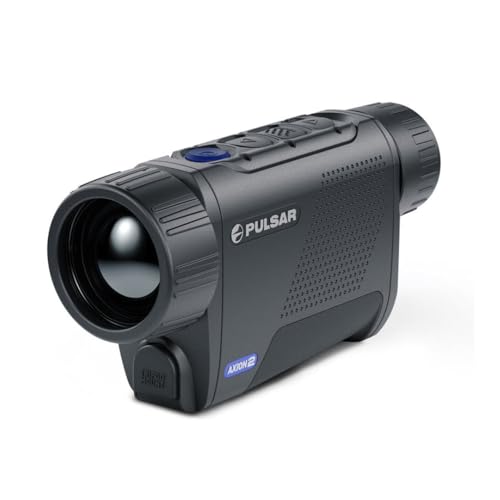
Pulsar Axion 2 XG35 Thermal Monocular
A compact 640x480 / 12µm handheld monocular, the model most people start with for coyote and hog work. Small enough to pocket, with a detection range that covers typical field distances.

Pulsar Telos LRF XP50 Thermal Monocular
The flagship 640x480 / 17µm monocular with a built-in laser rangefinder and a repairable, upgradeable platform. The one long-range scanners move up to when the Axion runs out of reach.

Pulsar Merger LRF XT50 Thermal Binocular
A two-eyed 1280x1024 / 12µm thermal binocular with a laser rangefinder, for people who scan for long sessions and want less eye fatigue than a monocular.
About This Guide
Pulsar runs a wide thermal line-up that is easy to get lost in. The Axion, Telos and Helion are handheld monoculars; the Merger and Accolade are binoculars; the Thermion, Talion and Trail are riflescopes; and the Krypton, Proton and Core are front clip-on attachments. Each family then splits again by sensor - XQ (384x288) or XG/XP (640x480), 17µm or 12µm pixel pitch, with or without a laser rangefinder.
That is the gap this site fills. It is a model and fit reference, organised the way a buyer actually shops: by what you are trying to do - scan on foot, range before a shot, or clip onto an existing day scope - and then by which sensor and detection range that calls for. Specifications here come from the manufacturer's published figures and the product listing being described; nothing is estimated to fill a gap.
This is an independent reference. It is not run by Pulsar, Sellmark or Yukon Advanced Optics, and it is not endorsed by them. Where a page links to Amazon, that link is an affiliate link.