
Pulsar Axion 2 Thermal Monocular
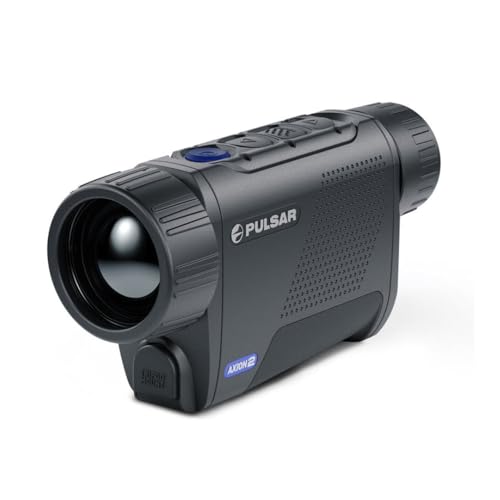
The Axion 2 is Pulsar's current generation of compact handheld thermal monoculars, sold in two main sensor grades: the 384x288 XQ35 and the 640x480 XG35, each with LRF rangefinder options. Choose by resolution and budget: XQ for the value-focused all-rounder, XG for the sharpest, longest-reaching image. It suits hunters who want a pocket-size thermal scanner.
Pros
- Two sensor grades (384x288 XQ35, 640x480 XG35) cover value and flagship needs
- LRF options add a built-in ~1,100 yd rangefinder
- Pocket-size magnesium alloy body across the line
- Removable APS5 pack (about 7 hours) with flexible USB-C charging
- Stream Vision 2 app for streaming, recording and firmware updates
Cons
- Compact body and 35mm lens limit reach versus larger handhelds like the Telos
- 640x480 XG35 carries a clear price premium over the XQ35
- Base models without LRF give up the rangefinding the Pro and LRF versions add
What the Axion 2 Line Is
The Axion 2 refreshes Pulsar's smallest handheld thermal family. Every variant shares the same compact, reinforced magnesium alloy housing built to take shocks, drops, moisture and temperature extremes while helping move heat away from the electronics. The common feature set includes three sensitivity levels that adjust signal amplification, filters, brightness and contrast, so you can tune the image for clear nights or humid, low-contrast weather.
What changes between models is the sensor and whether a rangefinder is fitted. The XQ35 uses a 384x288 core; the XG35 uses a 640x480 core for finer detail at distance. LRF versions add a built-in laser rangefinder with roughly 1,100 yards of reach for distance confirmation before a decision.
Choosing a Variant
The decision comes down to resolution, rangefinding and budget. If you want the most capability for the money and expect most work inside a few hundred yards, the XQ35's 384x288 sensor identifies game and scans terrain cleanly. If you want the sharpest image, the most reach and the clearest separation of animal from background, the XG35's 640x480 core is the flagship, at a higher price.
Across both, the LRF option is worth it if you value ranging an animal without carrying a second device; it offers single and continuous scanning modes and a stated ±1m accuracy. The table below sums up where each sits.
| Variant | Sensor | Best for |
|---|---|---|
| Axion 2 XQ35 | 384x288 | Value all-round scanning and ID |
| Axion 2 XG35 | 640x480 | Sharpest image and most reach |
Popular options on Amazon
Prices change often - check the current price on Amazon.

Power, App and Ecosystem
The Axion 2 line runs on a removable APS5 lithium pack rated for about 7 hours of continuous use. Because it pops out, you can carry a spare and swap it in the field. Charging options are flexible: a dedicated charger, a PC, household power or a USB-C power bank, and the device accepts external power for longer sessions.
Built-in Wi-Fi connects the unit to the Stream Vision 2 app on Android or iOS. Through it you stream the live image to a phone, record footage, control functions remotely and install firmware updates that extend the device over time.
How It Compares to Other Pulsar Handhelds
The Axion 2 is the smallest handheld in Pulsar's range. The earlier original Axion line, including the XQ19, XQ30 Pro and XM30, remains relevant for buyers shopping older or smaller configurations. If you want a larger sensor and a platform you can upgrade over time, the step-up is the Pulsar Telos, which trades the Axion's pocketability for bigger optics and a modular design.
To see the Axion 2 ranked against other compact thermal monoculars, see our best thermal monoculars shortlist. For most hunters the Axion 2 strikes the balance of size, image quality and price that makes a handheld worth carrying every night out.
Specifications
| Spec | Value |
|---|---|
| Sensor / resolution | XG35- 640x480 12µm |
| Housing / build | Without LRF |
| Weight | 0.8 Pounds |
| Length | 6.6 inches |
| Width | 1.9 inches |
| Height | 2.9 inches |
Frequently Asked Questions
What variants does the Pulsar Axion 2 come in?
What is the difference between XQ35 and XG35?
XQ35 uses a 384x288 thermal core; XG35 uses a higher-resolution 640x480 core. The XG35 resolves more detail and reaches farther, which is why it is the flagship and costs more.
Does the Axion 2 have a rangefinder?
The LRF versions do. They add a built-in laser rangefinder with roughly 1,100 yards of range, single and continuous scanning modes and a stated ±1m accuracy. Non-LRF models scan and identify but do not range.
How is the Axion 2 different from the original Axion?
The Axion 2 is the newer generation with refined sensors, the APS5 battery and current Stream Vision 2 support. The original Axion family covers earlier and smaller models like the XQ19 and XM30.
Is the Axion 2 worth it over a larger Pulsar handheld?
If portability matters, yes. If you want a bigger sensor and an upgradeable platform, consider the Telos, which gives up the pocket size for larger optics and a modular design.
Ready to check the latest price?
Check Price on Amazon