
Pulsar Thermal Comparison Chart
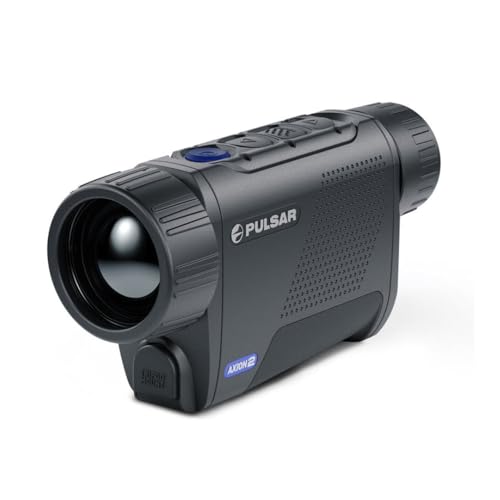
Pick by format first: the Axion 2 is the compact go-everywhere monocular, Telos and Helion are larger handhelds with more reach, Merger is the dual-eye binocular, and Thermion is the rifle-mounted scope. Then read the sensor code. This chart maps each line to its job.
Pros
- One consistent app and battery system across monoculars, binoculars and scopes
- Clear sensor ladder so you can match resolution to how far you glass
- LRF versions put ranging in the same optic you scan with
Cons
- Higher-resolution cores push flagship pricing up sharply
- Model names are code-heavy and confusing until you learn them
How to read a Pulsar model name
The letters after the family tell you the detector, and that drives most of the price gap. XQ is a 384x288 core; XP and XG are 640x480, which puts more pixels across the same scene for a cleaner picture and more usable detail at distance. XT is the top 1280x1024 tier. The number is roughly the objective lens in millimeters, so an XP50 is a 640x480 core behind a 50mm lens.
Pitch matters too: newer cores use a finer 12 micron pixel pitch instead of the older 17 micron, which sharpens the image. The suffix LRF means a built-in laser rangefinder is in the housing. Judge any Pulsar on core resolution first, then lens size, then whether it carries ranging.
Pulsar models at a glance
| Model | Type | Sensor / resolution | Best for |
|---|---|---|---|
| Axion 2 | Handheld monocular | 384x480 class (XQ / XG variants) | Pocketable scouting and walked-up detection |
| Telos | Handheld monocular | Up to 640x480, LRF versions | Longer scans with integrated ranging, repairable platform |
| Helion | Handheld monocular | 384x288 to 640x480 | All-round field scanning across a long-running line |
| Merger | Binocular | 640x480, LRF versions | Hours of two-eyed glassing with depth perception |
| Thermion | Riflescope | 384x288 to 640x480+ | Rifle-mounted shooting with onboard ballistics |
| Talion | Riflescope | 384x288 to 640x480 | Lighter-cost thermal scope for hog and predator work |
Use the type column to narrow first, then compare cores within one format. For a reasoned shortlist of handhelds, see our best thermal monoculars guide.
Popular options on Amazon
Prices change often - check the current price on Amazon.


What the sensor grade actually changes
A 640x480 core resolves far more detail than a 384x288 core at the same distance, so animals separate from clutter sooner and you spend less time guessing. That resolution step, plus the finer 12 micron pitch on newer models, is the main reason flagships like a Telos XP50 or a Merger cost more than an entry 384 unit.
Display quality follows the sensor. The Telos LRF XP50, for example, pairs its core with a 1024x768 AMOLED display and a sub-18mK NETD sensor, which is what delivers a crisp image out toward its long detection range. If your hunts are short-range in brush, a lower core saves money without much real-world loss; if you glass open country, pay for the higher core.
Shared ecosystem across every line
Whatever format you pick, the Pulsar platform is consistent. Stream Vision 2 over built-in Wi-Fi handles streaming to a phone, recording and firmware updates across monoculars, binoculars and scopes alike through the Stream Vision 2 app. Power is removable lithium packs, so a spare battery keeps you running past a single charge, and Axion models use the APS5 pack rated around seven hours.
Builds share a rugged magnesium alloy housing that resists shock, drops, moisture and temperature swings. That common toolkit means the real choice between models is format and sensor, not learning a new system each time you upgrade.
Specifications
| Spec | Value |
|---|---|
| Sensor / resolution | XG35- 640x480 12µm |
| Housing / build | Without LRF |
| Weight | 0.8 Pounds |
| Length | 6.6 inches |
| Width | 1.9 inches |
| Height | 2.9 inches |
What owners say
Pulsar thermion gen1 vs gen2 ? ... Getting close to pulling the trigger on a new thermal mostly for hogs. Long story short, I've had a Thor 4, and ...r/ThermalHunting
Frequently Asked Questions
Which Pulsar thermal is best for a first-time buyer?
A handheld monocular like the Axion 2 is the usual starting point: compact, simple, and enough to learn thermal scanning. Match the sensor code to your range, then upgrade format later if you need two-eyed comfort or a rifle mount.
What is the difference between XQ and XP Pulsar models?
XQ is a 384x288 sensor and XP is 640x480. The XP core packs more pixels across the same view, so it resolves detail and separates targets from background clutter at greater distance. That resolution gap is the biggest single driver of price between otherwise similar models.
Do all Pulsar thermal units have a rangefinder?
No. Only models carrying the LRF designation include a built-in laser rangefinder. Non-LRF versions drop it to cut weight and cost. If you want to confirm distance before a shot through the same optic, choose an LRF variant.
Can one Pulsar app control all my devices?
Yes. The Stream Vision 2 app connects over Wi-Fi to monoculars, binoculars and riflescopes for recording, streaming and firmware updates. Learn it once and it carries across your kit. See the Stream Vision 2 app page for details.
How do I compare Pulsar handhelds specifically?
Start with the type and sensor columns above, then read our ranked best thermal monoculars guide for the reasoning behind each pick by use case and budget.
Ready to check the latest price?
Check Price on Amazon